
Blackout proofing your home to keep essential power during grid failures
A sunny roof doesn’t guarantee power during a blackout. A blackout is an interruption to the electricity supply, and grid-tied solar shuts off when the network goes down, even if the panels are still generating. Blackout proofing your home for grid failures means having a system that safely disconnects your home from the grid and uses stored or available solar energy to supply selected circuits.
It’s easy to assume solar panels will keep the lights on, but standard grid-connected systems are designed to stop supplying power during an outage. A battery with suitable blackout protection can provide a safer, more reliable way to keep essential circuits running.
This guide explains what happens during a blackout, why grid-tied solar shuts down, and how safe disconnection, batteries and selected backup circuits work together. You’ll also learn what affects how long stored power lasts, so you can assess options for keeping essential power available when the grid fails.
Table of Contents
Can solar panels alone power my house during a blackout?
Usually, no. Grid-tied solar switches off when the network fails, even in sunshine. Blackout proofing your home for grid failures means planning a safe backup supply for essential circuits.
Outage changeover equipment
A backup-capable inverter and transfer equipment disconnect the home from the grid before supplying selected circuits. This prevents electricity flowing back into the network during an outage. Some blackout-capable systems switch over in under 3 seconds. Australian homes can use solar and battery storage, or a generator, as backup options. State and territory emergency services commonly advise households to plan for outages, keep essential supplies ready and monitor local alerts.
Solar and battery backup coverage
Backup can power selected circuits, such as lights, a fridge and critical devices, rather than every appliance. A professional assesses household priorities and configures the circuits accordingly. For a prolonged outage, keep drinking water, shelf-stable food, a torch and charged devices available. Plan water supplies around household size, outage duration and individual needs, rather than relying on one figure for every home. If medical equipment or refrigerated medicines are essential, include their power and storage needs in the backup plan. To protect electronics from surges when electricity returns, switch off or unplug sensitive devices during an outage where it is safe and practical.
Battery backup operation
A solar battery stores excess energy for use when the grid fails, and rooftop panels may recharge it when conditions allow. During installation, a professional can configure battery reserves and app settings around priority loads, such as refrigeration or medical equipment. Monitoring can show charge, household use and system faults. Switching off non-essential appliances at the wall helps conserve stored power. This practical planning is central to blackout proofing your home for grid failures, particularly when an outage lasts longer than expected. Keep a household checklist of supplies, essential devices, medicines and backup arrangements.
How a professional can help conserve battery power during extended outages
During an extended outage, a generator can provide another source of backup power, but it produces carbon monoxide. Keep it outdoors and away from the home, and use battery-backed carbon monoxide detectors placed in the centre of each floor. Never rely on a generator to power indoor appliances directly.
Battery capacity needs to match the household’s essential energy use. A professional can assess expected loads, including heating, refrigeration and medical equipment, then configure which circuits receive backup. During the February 2022 East Coast blackout, protected battery systems discharged 5 to 10 kWh per home and supported key loads for 12 to 24 hours without grid support. Actual runtime depends on battery capacity and what’s powered.
To conserve stored energy, a professional can set battery reserves and app settings around priority appliances. Monitoring shows charge levels and household consumption, helping you switch off non-essential loads as the outage continues. If solar generation is available, the battery system may recharge while supplying selected circuits. These settings help households manage changes in demand.
Retrofitting an existing battery system starts with checking compatibility with the home’s solar panels and inverter. A professional can assess the equipment, backup capability and household requirements before planning changes. Battery selection should also account for capacity, durability, longevity, maintenance needs and warranty terms. Brand choice alone does not show whether a system suits the home’s loads.
Keep the fridge closed during an outage: a closed refrigerator can maintain its temperature for about 48 hours, while a half-full one can do so for about 24 hours. For refrigerated medicines, include their storage needs in the outage plan and arrange suitable backup cooling. A professional can factor essential refrigeration into the battery assessment.
For advice on matching battery capacity and backup loads, explore solar and battery solutions.
Why grid-tied solar systems shut off during blackouts
Grid-tied solar relies on the electricity network as its operating reference. When that supply fails, the inverter shuts down rather than continuing to export power.
This shutdown is a safety feature, not a fault. A grid-connected system can feed excess electricity back into the network, so it must stop during an outage. Compliant systems disconnect from the grid within 2 to 5 seconds. This helps prevent a standalone solar installation from sending electricity back into the grid during an outage. Ordinary solar panels alone therefore can’t keep household lights running during a blackout.
Solar can still contribute during an outage if the system includes suitable backup equipment. A battery system with blackout protection disconnects the home from the grid and creates a local supply for selected circuits. In this setup, rooftop solar can charge the battery when conditions allow. The backup inverter manages the change in operation, while storage helps balance generation with household use. Without equipment to isolate the home and create this local supply, panels won’t provide power during an outage.
A professional can use solar monitoring to track generation, battery charge, household electricity use and system faults. These readings show how daytime production compares with evening demand, including the needs of appliances used for heating or cooling. Existing solar panels and the proposed battery system also need to work together. A professional assesses compatibility and system capacity before planning changes, so backup operation suits the equipment already installed.
Shade can reduce solar panel efficiency. During a system assessment, a professional can identify shading and debris that affect panel exposure and plan appropriate maintenance. Clear, unshaded panels help maximise generation for household use and battery charging.
Renters and apartment residents can prepare with charged phones, power banks, torches and essential supplies. They can also learn their building’s outage arrangements and plan how to keep necessary devices powered.
Blackout protection and safe disconnection from the grid
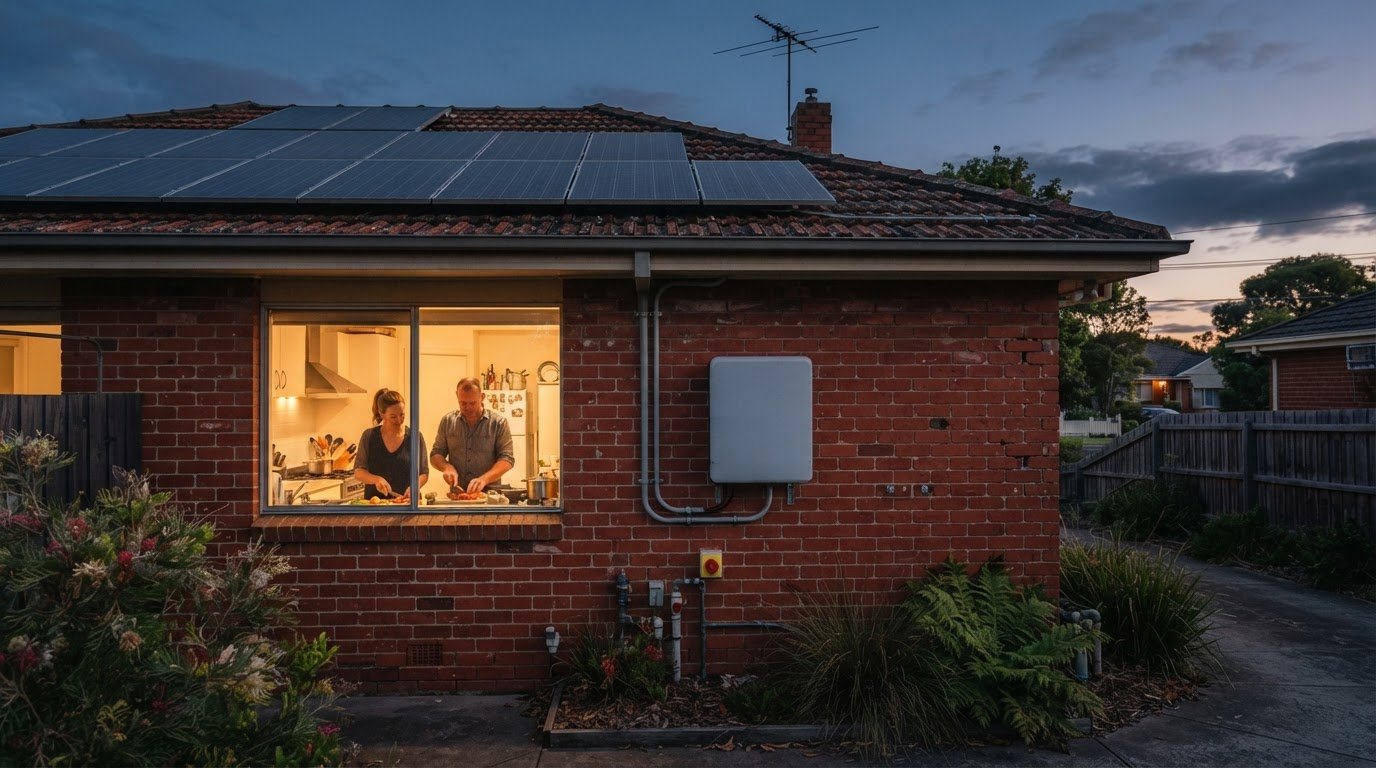
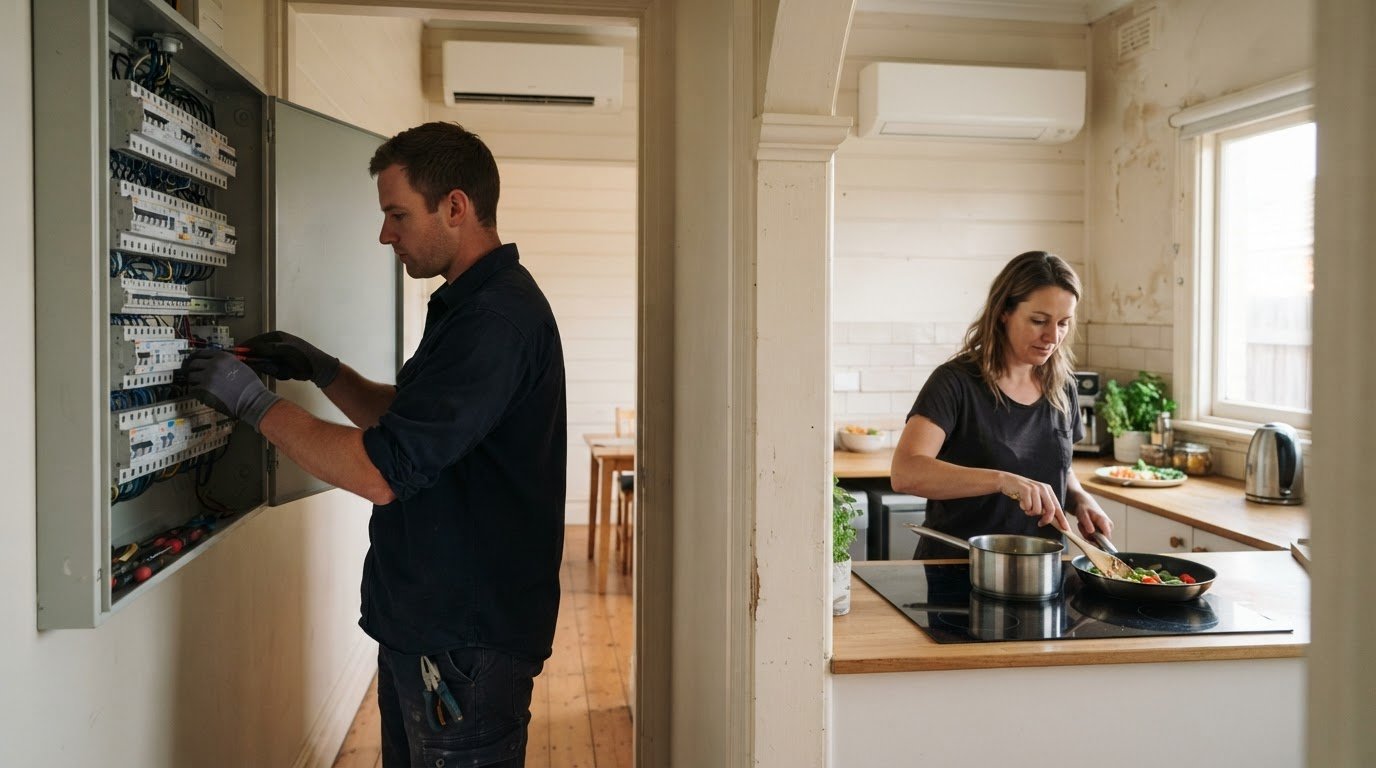
Safe blackout protection depends on controlled separation between your home and the Australian electricity network. An electrician assesses the existing solar, inverter, switchboard and battery storage, then designs how the home will operate when grid supply fails. The key requirement is to prevent excess electricity flowing back into the grid, protecting network workers during an outage.
The design starts with household priorities. The electrician identifies essential devices, such as lights, a fridge and communications equipment, then considers larger loads like air conditioning. These choices shape which circuits receive backup and how battery capacity is used. Running cooling alongside essential devices can affect how long stored power lasts, so expected loads and outage duration matter.
Next, the electrician selects and installs suitable isolation and transfer equipment with a compatible backup inverter. When grid power fails, the system disconnects the home from the network before supplying its designated circuits. This creates a separate power supply for the home instead of energising network lines. Existing solar panels may contribute during an outage if the inverter and battery system support that operation.
Commissioning checks that the equipment switches between grid-connected and backup operation as intended. The electrician tests isolation, transfer and backup supply, and confirms which circuits remain powered. Clear explanations help household members understand what to expect when an outage starts and which devices the backup arrangement supports. System capacity and circuit selection influence which appliances can run together.
For homes with existing solar, the practical takeaway is to assess compatibility and safe isolation as one design task. Backup equipment needs to work with the installed system while preventing power from flowing back to the grid. Arrange professional blackout protection for your home’s solar and battery setup.
Innovative Electrical Contractors: Off grid solar,batter and generator's
Innovative Electrical Contractors can help homeowners plan off-grid solar, battery and generator systems for essential power during grid failures. Turn to the team when you’re considering a new backup setup, upgrading an existing home system or planning power needs for a new home.
The right design starts with what needs to stay powered. Share which household devices matter most, such as a fridge, lights or medical equipment, and whether you need backup for selected circuits or broader household use. These priorities help shape a suitable system and clarify how solar generation, battery storage and a generator may work together.
Innovative Electrical Contractors also provides Electrical Services and Commercial Electrical for relevant projects. For a tailored discussion about backup power for your home, contact Innovative Electrical Contractors.
Plan for the power your household needs
Your backup plan should reflect not only today’s routine, but also how your household may change. A renovation, a new medical device or a change in who lives there can alter which circuits matter most. Treat resilience as a considered design choice: define the needs you want supported, then plan the system around those priorities. This keeps planning practical for an existing property or a future build. A professional assessment can bring your priorities, existing electrical setup and future plans into the same conversation.
Blackout proofing your home for grid failures is most useful when the solution is shaped around your real energy needs, not a one-size-fits-all assumption. To discuss a suitable next step, contact Innovative Electrical Contractors. A clear plan can help you move forward with confidence.
Frequently Asked Questions
What is a blackout?
A blackout is a complete loss of electricity supply to an area or property. It differs from a brownout, when electricity remains available at reduced voltage. For a household, a blackout can interrupt lighting, refrigeration, communications and heating or cooling. Knowing the difference helps you understand whether the issue is a total outage or reduced supply, and which backup arrangements may be useful.
Do I have to choose which circuits are backed up?
Yes. If your system is designed for selected-circuit backup, decide which circuits matter most. For example, prioritising the fridge, several lights and a communications outlet can maintain basic household functions without backing every appliance. Consider which rooms and devices are essential at different times of day. The chosen circuits determine what the backup system can supply during an outage.
Do I need a licensed electrician for battery backup installation?
Engage a licensed electrician to install battery backup equipment. The installation must integrate battery storage with the inverter, switchboard and backup circuits while maintaining safe isolation from the grid. A professional can assess how the equipment works with existing solar, configure the backup supply and test system operation. This is especially important when essential devices depend on reliable power during an outage.
How fast does battery backup kick in when the power fails?
Blackout-capable systems often switch over in under 3 seconds. The changeover depends on the system’s inverter and transfer equipment, and only circuits configured for backup receive power. A brief interruption may still affect devices that need uninterrupted supply, so consider those needs during system design. Ask the installer to explain how your specific system changes over and which household circuits remain powered.
Is there a government rebate for batteries in NSW?
Whether a rebate applies depends on an active NSW or national program and its eligibility rules. Don’t include a rebate in your battery budget unless the current program covers your installation and circumstances. Eligibility may depend on factors such as the system and household requirements. Treat incentives as conditional when planning, because buying a battery alone doesn’t establish that you qualify.
What is a brownout?
A brownout is a reduction in electricity supply voltage, rather than a complete interruption. Australian electricity companies may reduce system voltage by 10-25% during a brownout, which can last from a few minutes to several hours. Some appliances may behave differently under reduced voltage. If you notice unusual operation, avoid assuming the issue is a full blackout and monitor whether normal supply returns.

Comments