
How to convert to an all-electric home and estimate costs
The biggest cost in converting a gas home to all-electric isn’t one appliance. The cost to convert a gas home to all-electric in 2026 depends on which gas systems need replacing and whether your home’s electrical setup can support them. You can plan the change around your home and priorities.
It’s reasonable to want a clear budget before you commit. Replacing gas hot water, heating and cooking can involve different equipment and electrical work, so the right estimate starts with the systems already in place. Going electric can also bring benefits, but it isn’t automatically the best fit for every household.
This guide explains what affects the cost, which systems may need replacing and where switchboard or connection work may be needed. It also considers practical benefits and drawbacks for Australian homes, helping you understand the decisions involved before planning a conversion.
Table of Contents
What is an all-electric home, and why does it matter for Australian homes?
An all-electric home replaces gas appliances with electric alternatives. Common changes include hot water, cooking and heating; reverse-cycle air conditioning can also provide cooling. Planning these upgrades together helps show how electrical work may affect the overall project.
Electrical capacity and safety depend on the home’s wiring, switchboard and appliances being installed. An induction cooktop can require a 20A connection, so an electrician assesses the existing supply and circuits before installation. The required work depends on the equipment and the home’s electrical setup.
A conversion usually involves an electrician, as well as relevant gas and plumbing trades for appliance disconnection and connections. The sequence and duration depend on how many systems are changing and whether wiring or switchboard work is needed. A site assessment helps define the project scope.
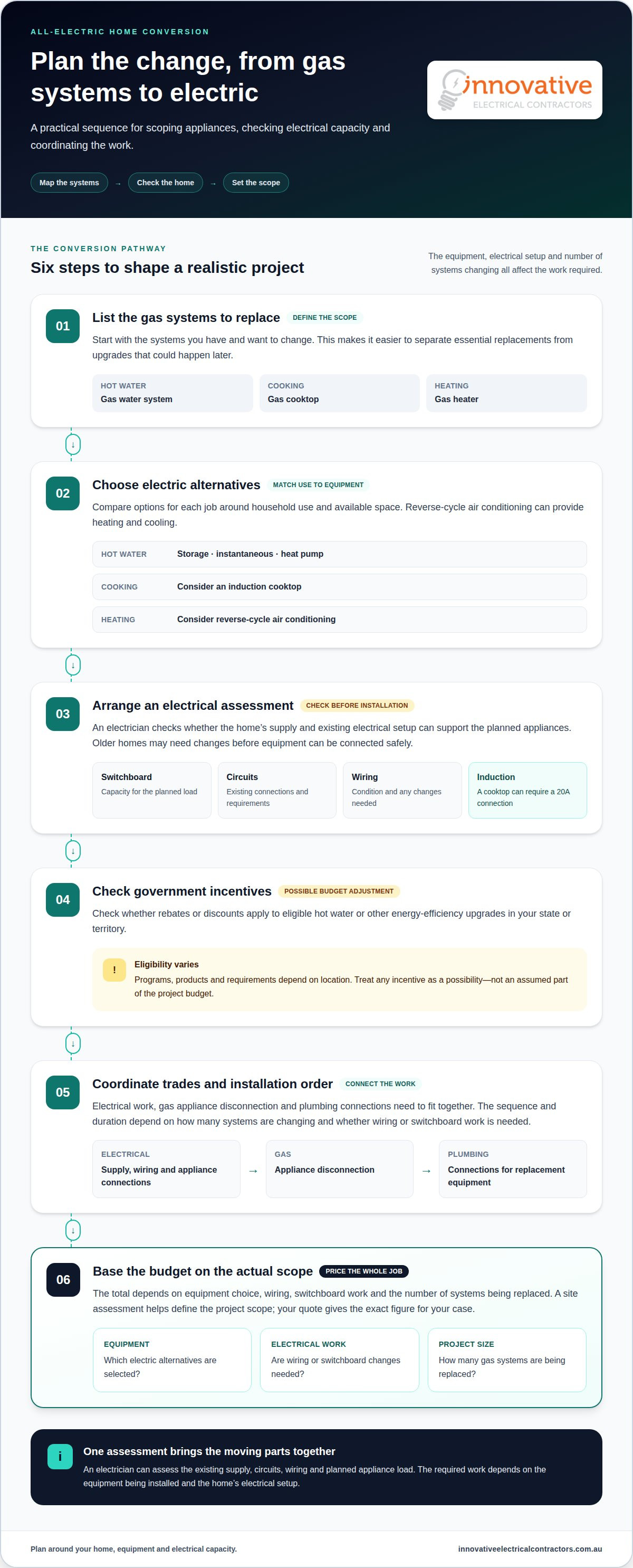
List the gas systems to replace. Include hot water, cooking and heating. This gives the project a clear scope and helps separate essential replacements from upgrades you may stage later.
Choose electric alternatives for each use. Compare storage, instantaneous and heat-pump hot water options, then consider induction cooking and reverse-cycle heating. The right combination depends on household use and available space.
Arrange an electrical assessment. An electrician checks switchboard capacity, circuits, wiring and the planned appliance load. Older homes may need changes before new equipment can be connected safely.
Look into government incentives. Check whether rebates or discounts apply to eligible hot water or other energy-efficiency upgrades in your state or territory. Programs, products and eligibility requirements vary by location.
Coordinate the trades and installation sequence. Electrical work, gas appliance disconnection and plumbing connections need to fit together. Planning the order helps avoid replacing equipment before the necessary connections are ready.
Base your budget on the actual scope. Equipment choice, wiring, switchboard work and the number of systems being replaced all affect the total. Your quote gives the exact figure for your case.
Replacing gas heating with reverse-cycle air conditioning
Reverse-cycle air conditioning can replace gas heating while providing cooling. Plan the replacement around your home’s layout, current heating system and the rooms where you need comfortable temperatures.
Identify the heating to replace. A ducted gas heater serves multiple rooms, while a non-ducted gas space heater heats a particular area. The existing system and preferred room coverage shape the replacement plan.
Match the system to the home. A reverse-cycle system’s location and capacity affect how it heats and cools living spaces. An assessment considers room layout, insulation, windows and how household members use each area.
Compare heating efficiency. Reverse-cycle heating units can be highly efficient compared with gas heaters. Consider this alongside the home’s comfort needs, climate and expected pattern of use.
Look into available incentives. Government rebates and discounts may apply to eligible heating upgrades, depending on your state or territory, product and program requirements. Treat any incentive as a possible budget adjustment, not an assumed part of the project.
Account for the existing electrical connection. A professional assesses the supply, circuits and equipment location before installation. Required electrical work depends on the home and selected system, so include it in the project scope.
Compare the full replacement scope. The installed price depends on the system, room coverage, installation requirements and any electrical changes. The exact figure is provided in a quote for your case. For a planned heating and cooling change, professional air-conditioning installation can help align the system with the home.
Benefits and drawbacks of switching from gas to electricity
Switching can reduce gas use and consolidate household energy systems, but older homes may need electrical upgrades. Depending on the property, additional costs can include wiring changes, switchboard work and gas-meter removal.
Compare appliance efficiency. Heat-pump hot water systems can use up to 80 per cent less electricity than conventional electric hot water systems, depending on household requirements and location. Induction cooktops transfer energy efficiently to cookware, while reverse-cycle air conditioning can provide heating and cooling.
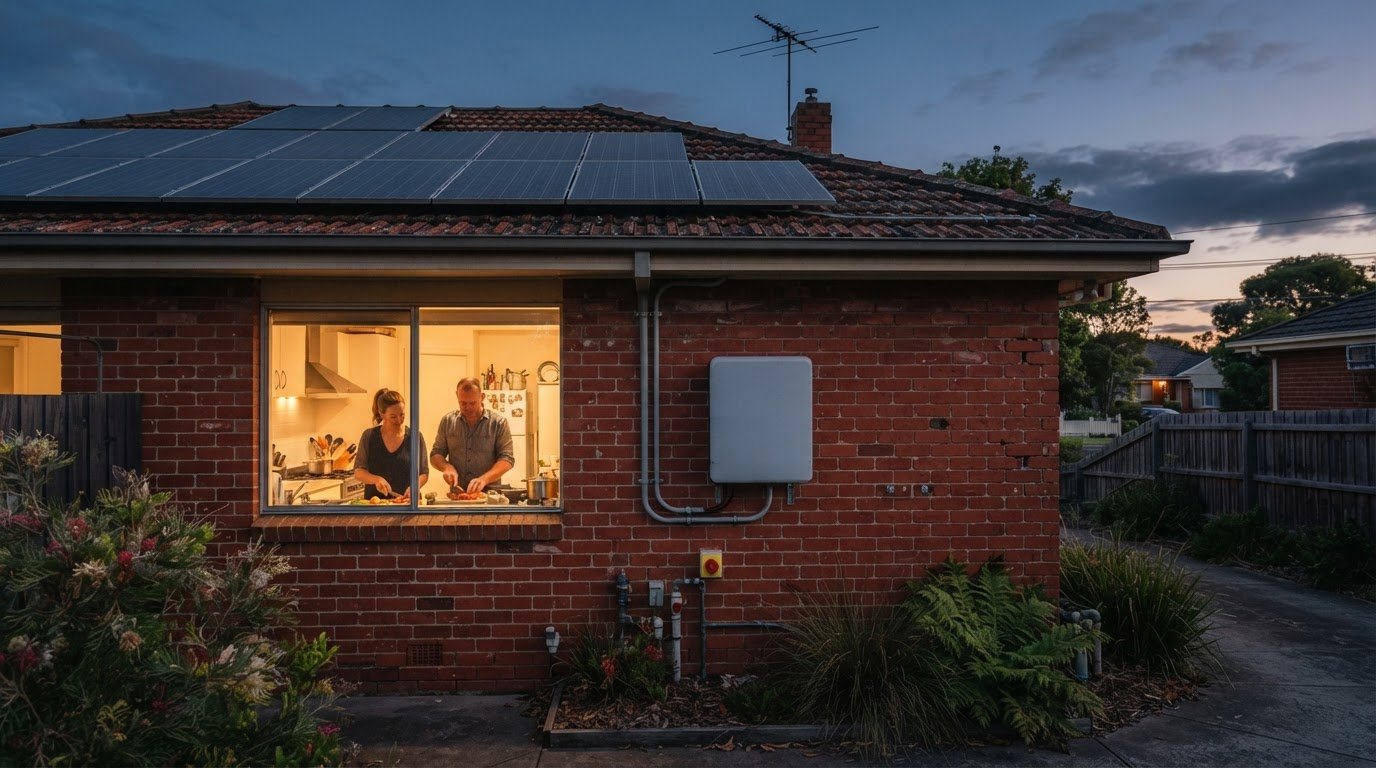
Consider what existing solar can contribute. Solar panels can supply some electricity for appliances during generation hours. A battery can store surplus solar energy for later use, but adds another system to plan and install.
Balance efficiency against upfront work. Replacing a gas heater, hot water system and cooktop means arranging new appliances and connections. Older wiring, limited switchboard capacity or the location of existing circuits can add electrical work to the project.
Account for gas supply charges. The saving depends on disconnecting gas service, not simply switching off individual appliances.
Include meter removal in the plan. This is separate from appliance replacement and may affect the timing of a complete changeover.
Review incentives and eligibility. Victorian Energy Upgrades discounts and Solar Victoria rebates can reduce eligible upgrade costs. Eligibility depends on the program and product, so factor incentives into the budget rather than assuming every household qualifies.
Weigh the trade-offs before choosing a sequence. Electricity can simplify a home’s energy setup, while the transition may involve several appliances, trades and electrical changes. A staged approach can spread the work, but leaves gas supply charges in place until disconnection.
How much does a switchboard upgrade or three-phase connection cost for an all-electric home in Australia?
There’s no single conversion cost for every Australian home. The work depends on the existing electrical supply, switchboard condition and appliances planned. An electrician can assess these factors and determine whether upgrades are needed.
List the appliances and their electrical needs. Include the induction cooktop, hot water system, heating and cooling equipment. Induction cooktops can require 20A, 32A or 42A connections, depending on the model. These different requirements affect how the home’s circuits must be planned.
Assess the current switchboard and supply. The electrician considers existing capacity, wiring, circuit protection and the combined appliance load. Some older homes in Eltham or Epping may have single-phase switchboards that cannot handle an all-electric home’s load.
Establish whether three-phase is necessary. The decision depends on the equipment’s electrical requirements and the supply available at the property. A three-phase connection is not automatically required for every conversion. The assessment should identify the appropriate setup for the planned appliances.
Include access and installation work in the scope. The switchboard’s location, the condition of existing wiring and the route for new circuits can affect the work. Upgrades may involve more than replacing the board if the electrical layout also needs changes.
Ask for an itemised project quote. The total depends on the required switchboard changes, new circuits, supply work and installation complexity. The exact price is provided in a quote for your home, rather than assumed from a generic estimate.
Plan electrical work before appliance installation. This helps ensure the circuits and supply are ready for the selected equipment. To discuss switchboard and electrical upgrades, arrange an assessment of your home’s planned load and existing setup.
Innovative Electrical Contractors: New Homes
Innovative Electrical Contractors can plan electrical work for new homes and existing properties moving away from gas. For a new build, early planning helps coordinate electrical requirements with the intended appliances and layout. In an existing home, electrical services can support the work needed to accommodate new electric systems.
If you’re considering solar and battery as part of the transition, include them in your broader energy plans. The right approach depends on your property, intended equipment and the electrical work involved. Defining the project scope helps bring these decisions together.
Contact Innovative Electrical Contractors to discuss electrical planning for your home.
Make your next move with a clear plan
Use your conversion plan to decide what matters most: reducing reliance on gas, improving household comfort or preparing for future energy needs. That priority can guide the order of work and help keep decisions focused. Estimating the cost to convert a gas home to all-electric in 2026 starts with your property, intended equipment and project scope, rather than a generic figure.
Innovative Electrical Contractors provides electrical planning and services for residential projects, including off-grid solar and battery solutions. Share what you want your home to do, the changes you’re considering and your timing requirements. A clear conversation is a practical starting point for the next stage.
Discuss your plans with Innovative Electrical Contractors and take the next step towards an all-electric home that suits your household.
Frequently Asked Questions
How much does it cost to swap from gas to electricity?
The total depends on which gas appliances you replace and what electrical work your home needs. Replacing hot water alone is a different project from changing hot water, heating and cooking together. Appliance selection, wiring, switchboard work and installation access all shape the scope. A useful estimate separates equipment, electrical work and gas disconnection tasks.
Why switch from gas to electricity?
Switching can let you run household appliances on electricity and make better use of rooftop solar. It can also bring heating and cooling together through reverse-cycle air conditioning. Consider your priorities, such as reducing gas use, improving comfort or matching future appliance replacements with solar generation. The best reason is the one that fits your home and how your household uses energy.
Is electricity cheaper than gas?
Whether bills will be lower depends on your tariffs, appliances and household energy use. Compare total bills, not just the price per unit: gas accounts can include a supply charge even when consumption is low. Efficient electric appliances and solar generation may change running costs, while high electricity use when solar is unavailable can affect the comparison. Recent bills provide a practical baseline.
Can you remove my gas meter?
Yes, physical meter removal can be arranged through your gas distributor. Turning off gas appliances or stopping gas use doesn’t itself remove the meter. Plan removal after deciding which appliances to replace and coordinating their disconnection. This keeps the changeover sequence clear and ensures you consider the home’s remaining energy needs before gas supply ends.
Should you convert your Australian home to all-electric?
It can suit an Australian household planning to replace ageing gas appliances, but the right timing depends on your home and budget. Existing homes across the country are not bound by uniform state-specific phase-out dates, so upgrading is usually planned around the natural lifespan of your current gas systems, budget readiness and energy goals.
How much does it cost in Australia to convert a gas home to all-electric in 2026?
There’s no single conversion total for Australian homes. Estimating the cost to convert a gas home to all-electric in 2026 means accounting for the appliances being replaced, installation requirements and any electrical upgrades. Solar, battery storage and gas disconnection can also affect the project scope. A quote for your property from Innovative Electrical Contractors should set out the work involved and the factors behind the estimate.
Comments