
The Ultimate Australian Air Conditioner Buying Guide 2026

Did you know that choosing a six-star air conditioner could slash your annual energy consumption by up to 25% compared to a standard model? It's a massive saving, yet many Australian homeowners hesitate because they're worried about sky-high electricity bills or picking a unit that's too loud for the lounge. We know the frustration of staring at confusing energy labels and wondering if your home's switchboard can even handle a new system.
This guide changes that. You'll master the technical and practical aspects of selecting the perfect system for your specific needs. We'll help you decode the 2026 Zoned Energy Rating Label standards and ensure your installation is both safe and energy-efficient. From comparing top-rated brands like Daikin and LG to understanding why a dedicated electrical circuit is non-negotiable, you'll gain the confidence to create a comfortable home year-round. Let's get your cooling sorted with precision and peace of mind.
Table of Contents
What is an Air Conditioner and How Does it Suit the Australian Climate?
At its core, a modern What is an Air Conditioner? is a sophisticated heat pump system designed to regulate indoor temperature and humidity. While many people still view these units as simple cooling boxes, the technology has evolved into a comprehensive climate control solution. In our harsh environment, where coastal humidity meets intense inland heatwaves, a reliable system is a fundamental part of maintaining a liveable home. These units don't just lower the temperature; they filter the air and remove excess moisture, creating a healthier indoor atmosphere for your family.
Most homeowners now choose comprehensive climate control over cooling-only units. A cooling-only air conditioner does exactly what the name suggests, but it leaves you relying on separate, often expensive heaters during the winter months. By contrast, a reverse cycle system handles the entire year's weather with a single installation. This versatility is essential for managing the extreme temperature swings common in many parts of Australia.
The Mechanics of Modern Cooling
The refrigeration cycle doesn't actually "create" cold air. Instead, it moves heat from one place to another. During summer, the unit absorbs heat from your indoor rooms and pumps it outside, leaving behind chilled air. Modern units rely heavily on inverter technology to do this efficiently. Inverter compressors vary their motor speed to maintain a steady temperature rather than switching on and off, which significantly reduces energy consumption. This prevents the "all or nothing" blast of air common in older models and ensures a consistent, comfortable atmosphere throughout the day.
Why Australians Prefer Reverse Cycle Systems
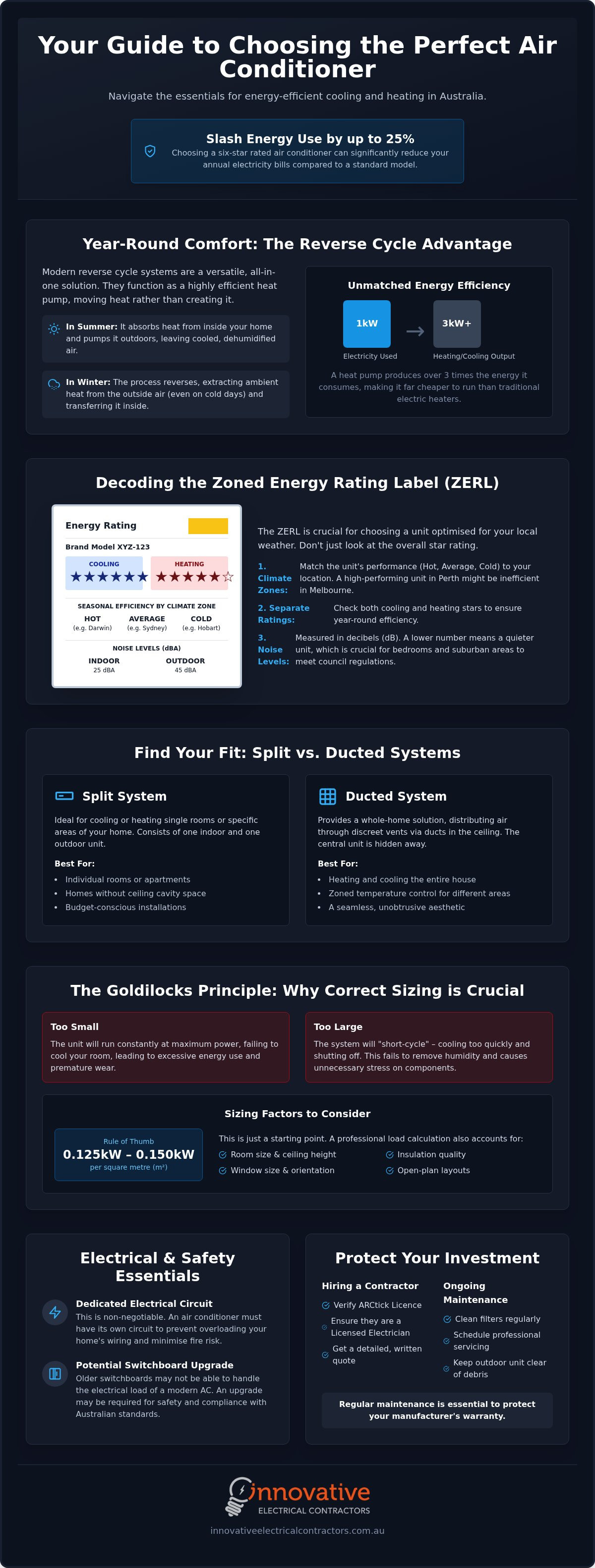
Reverse cycle systems are the gold standard for Australian homes for several practical reasons. First, they're incredibly efficient. A heat pump can produce three or more kilowatts of heating or cooling for every one kilowatt of electricity it uses. This makes them far cheaper to run than traditional electric bar heaters or plug-in radiators.
Using one system for year-round comfort is also more cost-effective for installation and long-term maintenance. You're only looking after one piece of equipment rather than two. Additionally, as more households look to reduce their carbon footprint, moving away from gas heating in favour of electric reverse cycle units is a major trend. It allows for a cleaner home and integrates perfectly with solar power systems, helping you achieve a holistic energy solution for your property.
Understanding Cooling Capacity and Energy Efficiency Ratings
Choosing the right capacity for your air conditioner is the difference between a cool sanctuary and a massive electricity bill. Capacity is measured in kilowatts (kW), and getting this number right is a precise science. If you choose a unit that is too small, it will run constantly at maximum power without ever reaching the set temperature. Conversely, an oversized unit is equally problematic. It leads to "short-cycling," where the system reaches the target temperature too quickly and shuts off, failing to remove humidity and causing unnecessary wear on the mechanical components.
Sizing Your System Correctly
In Australian homes, a common rule of thumb is roughly 0.125kW to 0.150kW per square metre of floor space. However, this is just a baseline. Your home's orientation matters; north-facing windows catch more sun and require more cooling power. High ceilings increase the volume of air that needs to be treated, while poor insulation allows heat to seep back in immediately. Open-plan living areas are particularly tricky because they often include kitchens with heat-generating appliances. For these spaces, a professional load calculation is essential to ensure you aren't left with hot spots. If you're unsure about your room's requirements, getting professional sizing advice from a licensed expert is the safest way to avoid a costly mistake.
Reading the Star Rating Label in 2026
The Zoned Energy Rating Label (ZERL) is a vital tool for 2026. Unlike the old single-rating system, the ZERL breaks down performance into three climate zones: Hot, Average, and Cold. This is critical because a unit that performs brilliantly in the dry heat of Perth might struggle in the tropical humidity of Darwin. As noted in the CHOICE buying guide, comparing these zones ensures you pick a model suited to your local weather patterns. The label also lists noise levels in decibels (dB) for both the indoor and outdoor units. Keeping the outdoor noise low is essential for compliance and being a good neighbour in suburban areas. Ultimately, the ZERL helps consumers compare seasonal performance by showing how efficiently the unit handles the specific temperature ranges of your specific region.
Comparing Systems: Split, Ducted, and Evaporative Options
Selecting the right hardware is the next step after calculating your room's kW requirements. A split system air conditioner is the most common choice for individual rooms. It consists of an indoor unit mounted on a wall and an outdoor compressor. These are affordable to buy and relatively quick to install. For larger properties, multi-head systems offer a middle ground, allowing you to run several indoor units from a single outdoor compressor, which is a great space-saver for tight blocks.
Split Systems vs. Ducted: Which is Right for You?
Ducted systems represent the ultimate in whole-home comfort. While a split system is visible on your wall, ducted units are almost entirely hidden, with only discreet vents in the ceiling. The installation is more complex and requires significant roof space. However, the primary advantage is zoning. You can choose to cool only the bedrooms at night or the living areas during the day. This targeted approach prevents energy waste in empty rooms. According to the Australian Government's guide to heating and cooling, choosing a system with high-efficiency zoning can lead to substantial long-term savings.
The Pros and Cons of Evaporative Cooling
Evaporative cooling is a unique alternative that works best in low-humidity environments. Unlike refrigerated systems that recirculate air, evaporative units draw in fresh air from outside, pass it through wet filter pads, and blow it through the home. This requires you to keep doors and windows open to allow the air to escape. It's much cheaper to run and provides a "fresh" feel that many people prefer. It's a popular choice in inland regions where the air is consistently dry.
There are trade-offs to consider with evaporative systems. They struggle on humid days because the air can't hold any more moisture. You also need to stay on top of maintenance. The water pads and filtration systems require regular cleaning to prevent mineral buildup and ensure the air stays hygienic. If you live in a coastal area with high humidity, a refrigerated air conditioner remains the more reliable choice for consistent comfort year-round. We always recommend assessing your local climate before committing to an evaporative setup.
Electrical Requirements and Installation Essentials
Installing a new air conditioner is more than a simple delivery and mounting job. It's a significant addition to your home's electrical infrastructure. Unlike a portable fan or a toaster, a fixed climate control system draws a substantial amount of power, especially during the initial start-up phase. For this reason, Australian safety standards require most systems to have a dedicated electrical circuit. This ensures the unit has a stable power supply without overloading existing circuits used for your lights or kitchen appliances.
Switchboard Upgrades and Circuit Safety
Your switchboard is the control centre of your home's electricity. If your property is older, the existing board might not be equipped to handle the load of a modern 5kW+ system. Common signs that an upgrade is necessary include ceramic fuses, a crowded panel with no room for new breakers, or lights that flicker when heavy appliances kick in. Modern switchboards use Residual Current Devices (RCDs) and high-quality circuit breakers to prevent electrical fires and protect your family from shocks. For a broader look at how your home's wiring supports these upgrades, you can read more about Modern Electrical Services for Australian Properties. Ensuring your backbone is ready is the first step toward a safe installation.
Maximising Efficiency with Solar Power
An air conditioner and a solar power system are a perfect match for the Australian climate. You can use smart timer functions to "pre-cool" your home during the middle of the day when your solar panels are producing peak energy. This turns your home's thermal mass into a battery, keeping the house cool well into the evening for almost zero cost. If you have a battery storage system, you can extend this comfort through the night without drawing expensive power from the grid. To ensure your energy setup remains reliable, it's vital to follow a Solar Battery Maintenance routine that protects your long-term investment.
Safety and compliance are non-negotiable. Attempting to DIY any part of the electrical or refrigerant installation is illegal and will immediately void your manufacturer's warranty. It also puts your home at risk. Always hire a licensed electrical contractor who can provide a Certificate of Electrical Safety upon completion. If you're planning a new installation, we recommend booking a professional electrical assessment to confirm your home can safely support your chosen system.
Maintenance and Choosing the Right Contractor
A high-quality air conditioner is a significant investment in your home's long-term comfort. To protect that investment, you need a proactive approach to maintenance and a contractor who values precision. Regular servicing doesn't just keep you cool; it extends the unit's lifespan and keeps your energy bills from creeping up over time. At Innovative Electrical Contractors, our approach is built on safety and performance. We ensure every system we touch operates at its peak efficiency, backed by the technical mastery required for both complex electrical and refrigerant work.
DIY vs. Professional Maintenance
There are simple tasks you can handle yourself to keep things running smoothly. Every few months, you should clean the indoor unit's filters to ensure unrestricted airflow. It's also important to clear leaves, cobwebs, or debris from around the outdoor unit to prevent blockages. However, the more technical aspects must be left to the experts. A professional service involves checking refrigerant levels, testing electrical connections, and inspecting the condensate drain for blockages. We recommend a professional service at least once a year, ideally before the summer peak hits. This keeps the manufacturer's warranty intact and prevents minor issues from becoming expensive repairs.
What to Ask Your Installer Before They Start
Choosing the right installer is just as important as choosing the right brand. Many retailers focus only on the upfront price, but poor installation is the leading cause of early system failure and can void your warranty entirely. Before work begins, ask these critical questions:
Are you fully licensed? Your contractor must hold both a current electrical licence and an ARC (refrigerant handling) licence.
Will you provide a Certificate of Electrical Safety? This is a legal requirement in Australia and ensures the work meets national standards.
Where will the outdoor unit be placed? Proper placement is vital for airflow and noise reduction. It shouldn't be tucked into a corner where it will recycle its own hot air.
Is the quote comprehensive? Ensure the price includes all electrical work, including any necessary switchboard upgrades mentioned in previous sections.
A professional installer will commission the system correctly, checking that it reaches the right pressures and temperatures before they leave. This level of care ensures your home remains a comfortable sanctuary for years to come. By choosing a methodical partner who prioritises transparency, you gain the peace of mind that your system is safe, compliant, and ready for whatever the Australian weather throws at it.
Secure Your Year-Round Comfort with Confidence
Choosing the right air conditioner is about more than just picking a brand from a shelf. It's a strategic decision that balances your home's thermal load with efficient technology and a robust electrical foundation. By mastering the Zoned Energy Rating Label and prioritising a dedicated circuit, you've taken the most important steps toward a safer and more affordable living environment. A well-maintained system integrated with solar power isn't just a luxury; it's a smart long-term investment in your property's value and sustainability. You now have the technical knowledge to navigate the 2026 market with ease.
Our team at Innovative Electrical Contractors is ready to turn that knowledge into a high-performance reality. As Licensed Electrical Contractors and specialists in energy-efficient solar integration, we ensure your new system works in perfect harmony with your home's power profile. We include comprehensive switchboard and safety audits with our service to provide total peace of mind. Get a professional air conditioning assessment and quote from Innovative Electrical Contractors today. Let's get your home ready for the seasons ahead with precision and local reliability.
Frequently Asked Questions
How much does it cost to run an air conditioner in Australia?
Running costs vary based on your local climate zone and the unit's energy efficiency. A high-efficiency air conditioner with a 6-star Zoned Energy Rating Label can cost significantly less to operate than an older 2-star model. Typical hourly costs depend on your specific electricity tariff and whether you have solar panels to offset the draw. Each additional star on the label can reduce annual energy consumption by 15% to 25% for similarly sized units.
What is the difference between a split system and ducted air conditioning?
Split systems are designed for individual rooms and involve an indoor unit connected to an outdoor compressor. They are cost-effective for smaller spaces and quick to install. Ducted systems provide whole-home climate control through a series of vents in the ceiling. While more complex to set up, ducted systems offer discreet aesthetics and zoning capabilities. This allows you to cool specific areas of the house independently, reducing energy waste in unoccupied rooms.
Do I need a switchboard upgrade to install a new air conditioner?
You may require an upgrade if your current switchboard is outdated or lacks the capacity for a 5kW+ system. Modern units require a dedicated electrical circuit to ensure safety and prevent overloads. Signs you need an upgrade include ceramic fuses or flickering lights when heavy appliances start. A licensed electrical contractor will assess your board to ensure it includes modern RCDs and circuit breakers for compliant protection and total peace of mind.
How often should I have my air conditioner serviced?
Professional servicing should occur at least once every 12 months to maintain peak performance and protect your manufacturer's warranty. This involves technical checks of refrigerant levels, electrical connections, and drainage systems. You should also perform basic DIY maintenance by cleaning the indoor filters every few months. Regular attention prevents minor faults from escalating into major mechanical failures and ensures the air remains hygienic and fresh for your family throughout the year.
Can I run my air conditioner entirely off my solar panels?
Running your system entirely on solar power is possible during peak daylight hours when production is high. Using a smart timer to pre-cool your home while the sun is out allows you to use free energy effectively. To maintain this comfort after sunset, you would typically need a solar battery storage system. This holistic energy approach significantly reduces your reliance on the grid and lowers your overall electricity bills during the hottest parts of the year.
What does "Reverse Cycle" actually mean for my heating bills?
Reverse cycle technology allows your system to provide both cooling and heating by reversing the refrigeration cycle. This is incredibly efficient because the unit moves heat rather than generating it from a heating element. Compared to traditional electric heaters, a reverse cycle air conditioner can deliver three times the heating output for the same electricity input. It's often the most cost-effective way to stay warm during Australian winters while keeping your utility costs under control.
Is it cheaper to leave the air con on all day or turn it on and off?
It is generally more efficient to leave your unit running at a consistent, moderate temperature. Modern inverter technology allows the compressor to slow down once the target temperature is reached, using minimal power to maintain it. Turning the system off and on forces it to work at maximum capacity to cool a hot room from scratch. This creates a higher initial energy draw and puts more stress on the mechanical components over time.
How do I choose the right kW size for my bedroom?
A standard Australian bedroom typically requires a unit between 2.0kW and 2.5kW. However, you must consider the room's specific characteristics, such as window orientation and insulation levels. A north-facing room with large windows will require more cooling power than a well-insulated, south-facing space. Getting a professional load calculation from an expert ensures the unit is perfectly sized to avoid short-cycling or insufficient cooling during extreme Australian heatwaves.


Comments